Introduction: The Entryway Test That Tells the Whole Story
A front door swings open. Warm air, cool tile, the hush of a tall stair. The light should bloom, then settle, like a perfect sauce that coats the spoon and not the plate. A chandelier supply company often meets that moment at the end of the chain, when design turns into delivery, and delivery has to perform. Many project audits note this hard truth: a sizable share of call-backs in tall foyers stem from scaling misses, harsh glare, or uneven dimming. The scene looks grand. The experience tastes flat. Why do small choices in diameter, height, and driver spec change the feel of a two-story space so much?
Think of it like seasoning. A pinch too much salt and you taste only salt; a fixture hung a bit too high and all you see is glare on glossy floors. Data from field checks show recurring patterns—over-bright centers, dim landings, noisy flicker near 1% output. And yet, a few upstream decisions fix most of it. What if we compared solutions by the way they cook light, not just how they look on the page? Let’s step into that comparison and pull apart what matters next.
The Hidden Gaps Behind Grand Foyer Glow
What slips through the cracks?
When we talk about chandeliers for two story foyers, we often picture scale and sparkle. But the deeper layer is control, comfort, and service. Too many specs lean on wattage and width, then skip how a fixture handles real stair traffic and morning glare. Look, it’s simpler than you think: start with the dimming curve, not the brochure photo. If the curve steps at low levels, the foyer will strobe at sunrise—funny how that works, right? Next, check thermal management. A crowded canopy bakes drivers, and hot drivers drift. Pair that with poor CRI at warm CCTs, and wood tones turn muddy. One more silent culprit is power converters that chatter with certain wall controls. Mix in a long suspension cable run, and voltage drop nudges output down the line, landing you with a bright top, dull bottom.
Traditional fixes often chase symptoms. Add more lumens. Lower the hang. Swap a wall dimmer. Each change moves the needle, but not the meal. The hidden pain points start upstream: mismatched driver protocols (0–10V vs ELV), ignored load rating on long circuits, and no plan for service height. In tall spaces, every minute on a lift has a cost. Field teams want fast swaps. If the light engine isn’t modular, you lose time. If the canopy won’t breathe, heat rises and life falls. And if CRI is low, art and stone lose pop even when the meter says “bright.” The better path compares fixtures by their lifecycle in that foyer: control smoothness, driver access, heat path, and color quality under real dim scenes.
Comparative Principles for Tomorrow’s Foyers
What’s Next
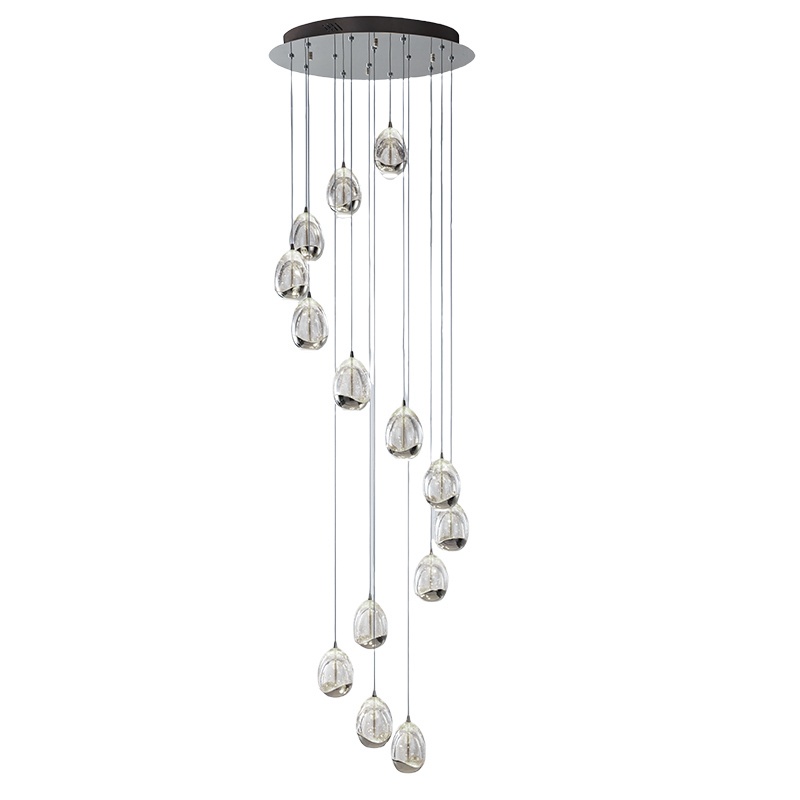
Here’s the forward-looking lens, semi-formal and practical. New systems treat the chandelier as a small ecosystem, not a single piece of jewelry. Think modular constant-current drivers with surge protection and clean EMI profiles. Think low-voltage bus wiring that reduces drop across long ascents. Think LED boards designed for both thermal headroom and even diffusion, so shadows don’t pool on landings. When you compare a classic clustered frame to a modern, distributed layout—like a refined 14 globe pendant light—you can map output and control per node, then tune balance in the field. Small tweak, big plate. The good news: these principles are measurable. The better news: they survive day two, month six, and year three.
Case insight helps. In retrofits, teams that chose field-serviceable light engines cut lift time by half. They also stabilized low-level dimming after switching to drivers rated for 1% with verified curves. Thermal management mattered more than expected—once canopies vented and heat paths improved, lumen sag slowed. And there’s the color story. High CRI at 2700–3000K made oak stairs read true; the space felt richer at lower lumens, saving energy while lifting mood. Compare that to older builds that chased brightness alone. The latter looked loud at noon and flat at dusk. The former felt consistent through the day—calm, then welcoming—because the system handled real-life scenes, not just a spec sheet snapshot.
How to Choose: Three Metrics That Keep Tall Foyers Honest
Advisory close, with numbers you can use. One: Control fidelity at low levels. Ask for documented dim-to-1% performance and a plotted dimming curve with your control type (0–10V, ELV, or digital). Flicker index and step size tell the truth when the sun is low. Two: Thermal plan and service design. Check driver location, canopy venting, and heat path. Demand modular light engines that swap in under 30 minutes at height, plus a clear load rating for the suspension system. Three: Color and comfort balance. Target 90+ CRI at your chosen CCT, test for glare on glossy floors, and confirm even vertical illuminance on landings. Add a final pass for power converters that play nicely with your building controls—no buzz, no drift. Do this, and the foyer sings without shouting. Do less, and every fix tastes like more salt. For steady, comparable outcomes across projects, keep these metrics on one sheet, and keep them close. When you need a reference point for specification details and component discipline, you can look to partners like kinglong for consistent documentation and field-ready design talk.